

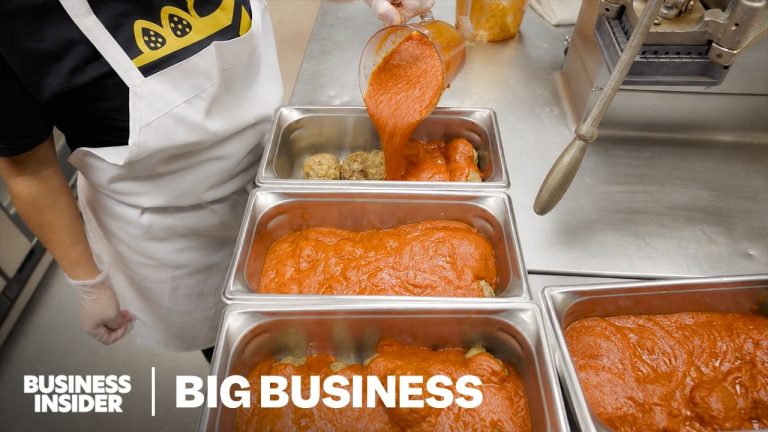
From massive warehouses and high-tech distribution centers to fresh produce facilities and restaurant kitchens, we go behind the scenes at Sysco to see how it delivers food, supplies, and ingredients to more than 670,000 customer locations worldwide.
In this episode of Big Business, we follow the journey from the factory floor to the delivery truck and meet the chefs and restaurant owners in New York City who rely on Sysco to keep their businesses running. But as Sysco pursues its biggest acquisition ever, Jethro Restaurant Depot, some operators worry about what the deal could mean for competition, prices, and the cost of eating out.
Watch our complete collection of Big Business videos: https://bit.ly/47ODoei
——————————————————
#Sysco #Restaurants #bigbusiness
WATCH MORE FROM BIG BUSINESS:
Why America Abandoned Route 66
https://youtu.be/77GAfNCG12g
The Rise & Fall Of America’s Drive-In Restaurants
https://youtu.be/UD7ZPxgIxbU
Inside The World’s Biggest Truck Stop
https://youtu.be/h5CM_5VA2PI
The Rise And Fall Of Southern Cafeterias
https://youtu.be/T9AQJj2Pquo
Business Insider is a global newsroom covering business, technology, innovation, and the economy.
Visit our homepage for the top stories of the day: https://www.businessinsider.com/?utm_source=youtube
Sign up for our newsletters: https://www.businessinsider.com/subscription/newsletter?utm_source=youtube
Find Business Insider on Facebook: https://www.facebook.com/businessinsider
… on Instagram: https://www.instagram.com/businessinsider
… on X: https://x.com/BusinessInsider
… on TikTok: https://www.tiktok.com/@businessinsider
Inside Sysco: How America’s Restaurants Get Their Food | Big Business | Business Insider
Business Insider is a video channel brought to you by SloppBoxx.Com, a global newsroom covering business, technology, and the economy.
















This is why I do not go to many restaurants
I will vote for anyone who blocks this merger and agrees to break up Sysco!
BREAK SYSCO UP!
Monopolies are eating the world and they are never a good thing.
Sysco sounds like a monopoly with extra steps
Like Amazon but in the food section
🤮🤮
I see a restaurant getting a Sysco delivery, I’m not eating there.
uncommon opinion, but the government and the people who vote for these power hungry politicians have no right to stop acquisitions
Definitely unpopular, break up the monopolies.
ahh yes I love eating the same bland, soul-less food no matter what restaurant I go to
I’m American and I left the US to live in Italy. And I tell you what… When I go back to visit, I feel sick and bloated almost right away from the food. This sort of processed shit is at the core of it. Everything so processed, cheesy, fatty, greasy, salty, sugary, etc.
I think that if you live in the US, you have boiled-frog syndrome and don’t realize how terrible the food is. I constantly see Americans talk about how good it is and the variety. And I’m not saying that you objectively cannot find good food, but it’s hard.
Even your ingredients suck. I got an “Italian” sub sandwich at a pretty high quality place. And it was good overall, but stuff like the tomatoes struck me. They were so pale and tasteless. And it’s a recurring theme in the US. Food made to be produced year round at the lowest price point.
Sysco and US Food are huge contributors to why restaurants in the US are such garbage most of the time. And why they make me feel sick when I visit.
monopolies left and right everywhere in the states. Break them all up
This is the part of the food business most people never see, and Business Insider did a great job getting inside it — the scale of moving hundreds of thousands of products through 25 facilities and still getting fresh produce to a small kitchen on time is a serious operational achievement. What struck me most is the chef shopping $50–100 a trip at a cash-and-carry warehouse, because that is the one lever a small restaurant still has over its own costs. As a founder, I keep thinking about that tension: the same scale that makes delivery reliable also concentrates the power to set prices. Thank you for showing both sides so clearly — the warehouses, the suppliers, and the chef’s actual receipts. For the independent restaurants watching this, what do you think protects a small operator’s negotiating power once that alternative disappears?
If Sysco wants to get into retail they need to open retail locations.
Damn, i’m sorry for you America